Is Augmented Reality (AR) Still a Thing?
It's less of a thing than the demos promised, and more of a thing than most leaders realize. Both are true at once.

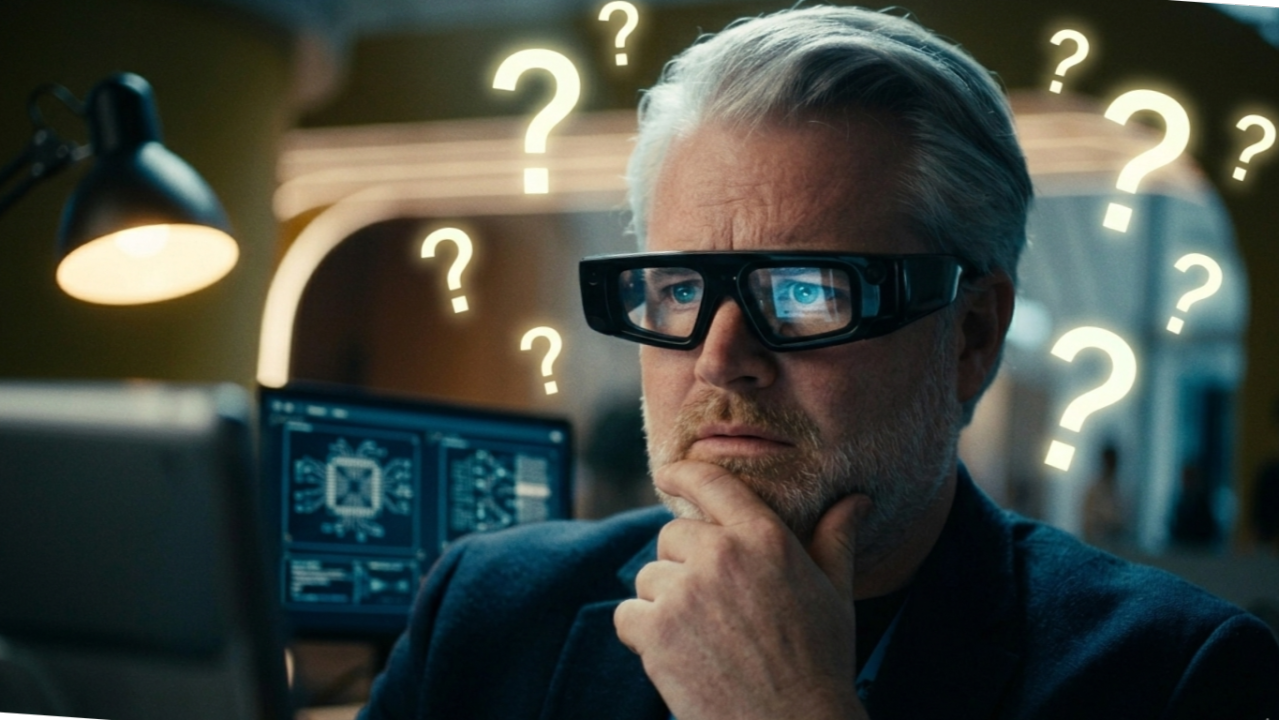
It caught me off guard. Then it made me think.
Because I spend my days so close to this that I forget it isn’t obvious to everyone else. To me the live question is never whether the technology is a thing. It’s how it helps the business in front of me sell, train, or explain a product that’s too big or too complex to put on a table. I forget that from the outside, after a few years of demos that went nowhere, the honest question is the one he asked. Is this over? Did we already miss it, or did it just never arrive?
So let me start where he’s right. Let me start with where AR did not deliver the promise we put in its mouth.
Where the promise broke down
First, the friction. Augmented reality is genuinely good. But in the best case you still pull out your phone, open your camera, and aim it at something. That’s a cost. Every single step between a person and the thing you want them to see is a place they quietly drop off. We built experiences that asked for three steps and then wondered why nobody finished them.
Second, we taught people to expect the wrong thing. AR got used, over and over, to make a dinosaur appear in the street or a billboard come to life for a few seconds. Those have their place. But that’s the whole memory most people carry, so when someone hears “AR,” they picture a party trick, and they hesitate. That’s not ignorance. That’s a fair read of what they were shown.
What most people never got to see
But the technology does so much more than dinosaurs and face filters. One example: we integrated augmented reality with a Salesforce CRM and location-based data, so a sales team could move through their Salesforce client engagement list in a more natural way, anchoring the CRM data to the real world around them instead of scrolling a screen. That’s the same technology people wrote off as a gimmick, put to work on a real sales workflow. The party trick and the serious tool look nothing alike, but most people have only seen the first one.
And here’s the part that’s on us, not on them. Immersive has almost always been the third wheel. If there’s budget left at the end of the plan, we’ll add a layer to bring some more wow. That is exactly where it goes wrong. The technology can carry real weight, but only when it’s woven into the strategy as a core element, not bolted on at the end to spend the leftover line. It has to amplify what you were already trying to do: convert someone, engage them, let them play, let them learn something they couldn’t learn from a brochure. On the side, it dies. Made essential, it works. That’s the whole difference, and most projects land on the wrong side of it.
What’s actually coming
So, is AR still a thing. Here’s the uncomfortable read. It’s heading toward business leaders faster than they think, and most of them don’t see it coming because they’re judging the future by the phone-and-camera version they already dismissed.
AR and AI glasses, and the wider wave of wearables coming with them, change the friction problem completely. No phone to pull out, no camera to raise, no app to open. The information just sits in the real world, in front of the person, personalized and in context. Picture your own customer for a second. A technician standing at one of your machines and seeing the next maintenance step laid over the part, in his language, at his skill level. A buyer walking your showroom and seeing the configuration that fits his line, not the generic spec sheet. A visitor to your stand who gets the version of your story that matches who he is, without you knowing in advance who’d walk up. When that becomes normal, the demand for content that’s ready for that moment goes up sharply, and it goes up faster than your content roadmap is currently planning for.
And the company that decides to wait until the last minute to join will be too late. The party will have moved to another location, and you’ll be standing there with your audience already gone. Late to this isn’t a slow start you can sprint to catch. It’s arriving after everyone left.
The model that’s quietly ending
Here’s the habit it breaks, and it’s a deep one. We’re all trained to think in websites. People will come to our site, our channel, our booth, to get to know us. That’s the model the whole department is built around. AI and AR quietly end it. Increasingly no one is going to your website, because the information is already in front of them, in a style and a context they prefer, assembled by something that knows them better than your homepage does. You don’t get to be the destination anymore. You have to be ready wherever they already are.
Getting ready for that is not a matter of copying your content into a new container. That’s the trap, and it’s an expensive one, because it feels like progress. It needs more content, and content that assumes from the very start that it has to be flexible: read by a machine, reassembled on the fly, shown in contexts you didn’t design for. A few fresh images or that one old 3D model you’ve been reusing since 2019 will not carry you there.
Where to start
Now, I’m not saying throw everything out and start over. I’ve watched companies panic-buy a rebuild and waste a year. What I’m saying is smaller and harder: start a foundation. A project that runs over several years, with one person whose actual job is to watch how the technology evolves, how your own organization evolves, and to keep building toward a scalable base that grows with you. Build it right and it doesn’t belong to a device. It’s platform-agnostic by design, so it survives the next headset, the next pair of glasses, and the one after that. The hardware in the cupboard dates. The content layer underneath it doesn’t.
And you don’t start it in the future. You start it with one thing you already sell. Take a single product, build it once as a proper reusable asset, and put it to work this quarter in the three places you already need it: on the site, in your reps’ hands in front of a customer, and on the stand at your next show. One build, three places, paying for itself before any glasses arrive. That’s not a leap of faith into 2030. That’s your first layer, and it’s the one that earns the budget for everything after it.
Proof it compounds
I know that works because I’ve watched it compound. We’ve built with Toyota for nineteen years, in layers. A product model made for one project became the seed of the next. Warehouse environments built for a sales tool fed a training experience. Interaction patterns from one layer turned up in the one after. When we built their virtual city, almost none of its content was made for it. It was assembled out of layers that already existed, and it made every one of those earlier layers more valuable in return. That’s the difference between buying a campaign and building an asset. A campaign ends. An asset compounds. Build it once and it keeps paying back. Wait for it to be obvious and you’re buying it in a panic, late, at someone else’s price.
The honest answer
So, is AR still a thing. It’s less of a thing than the demos promised, and more of a thing than the people in that room realize. Both are true at the same time, and holding both is the whole point.
The question I’d put to you before your next budget round isn’t about technology at all. It’s this: if your customers stop coming to your channels to find you, what have you actually built that meets them where they already are?
Next edition I’ll get concrete about what that foundation looks like in practice, one layer at a time.
Need help convincing your CFO, or your boss, that this is worth starting now? Let’s talk.